

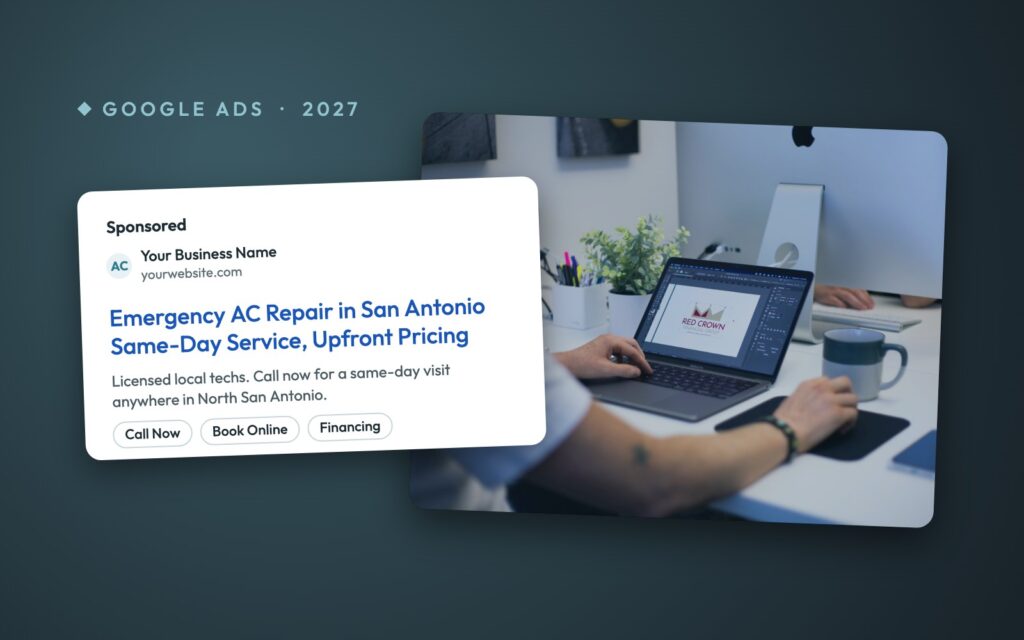
Google Ads strategies that worked fine two years ago are starting to quietly cost people money. Not because Google Ads stopped working. It still sends calls to plumbers, dentists and law firms all over San Antonio every day. But Google has been changing a lot of the plumbing behind the scenes, and some of those changes will hit small accounts in 2027 even if nobody’s watching.
So here are the Google Ads strategies we’d focus on going into next year. No crystal ball, no hype. Just the moves we think matter most for a local business spending a few thousand dollars a month (or less) on Google.
1. Fix Your Tracking Before You Touch Anything Else
This one isn’t exciting. It’s still number one, because every other Google Ads strategy on this list depends on it.
Google’s bidding is now almost entirely automated, and automation only knows what you tell it. If your account counts every form fill the same, including the spam ones and the guy asking if you’re hiring, Google will happily go find you more of those.
At minimum, make sure calls from your ads and form submissions on your site are tracked as conversions. Then take the next step most small businesses skip: tell Google which of those leads actually became paying customers. Google has been pushing this hard. Its own lead generation guidance this year talks about importing offline conversions through Data Manager and using Google tag gateway to capture form submissions more reliably.
In plain English, if an HVAC company in Stone Oak marks which calls turned into a $9,000 system replacement and which were “how much for a tune-up,” the system can learn the difference. Without that, it can’t.
2. Make a Decision About AI Max Before Google Makes It for You
This is the biggest change for Search campaigns, and a lot of owners haven’t heard about it.
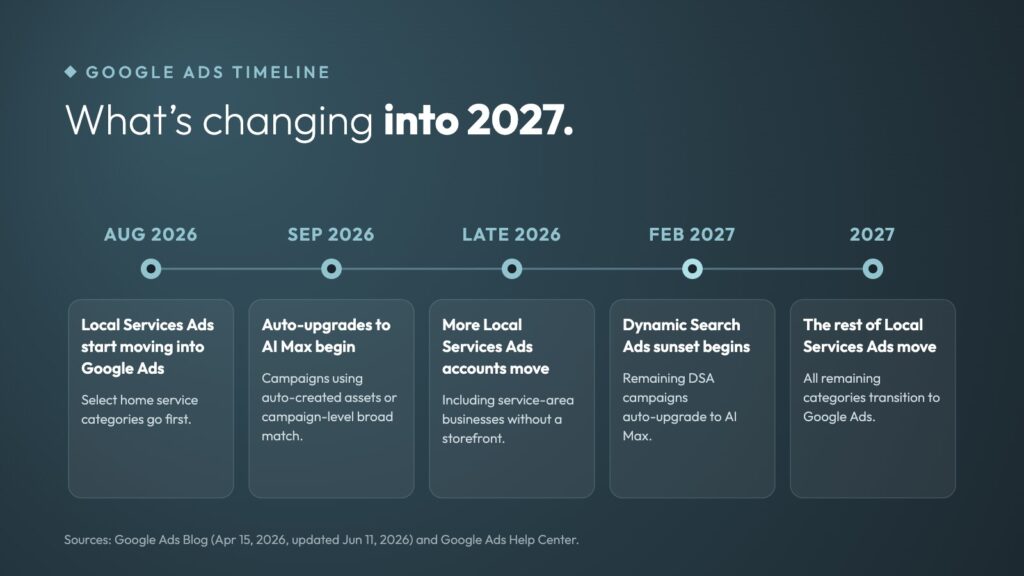
AI Max for Search moved out of beta this year. According to Google’s own announcement, campaigns using automatically created assets or the campaign-level broad match setting started getting upgraded to AI Max automatically in September 2026. Dynamic Search Ads got a little more breathing room. Their sunset and automatic upgrade now begin in February 2027.
AI Max isn’t bad. For some accounts it finds searches you’d never think to target. But it also writes ad text and can send people to pages on your site it thinks are a better fit. For a medical practice near the Medical Center or a law firm downtown, that’s not something you want running on autopilot.
Our advice: don’t wait to be upgraded. Turn it on yourself, on purpose, and set the controls Google added, like brand and location controls and text guidelines. Google also rolled out experiment tools so you can test AI Max against your current setup instead of just hoping. Use them.
3. Keep Reading Your Search Terms (Yes, Still)
More automation means more searches you didn’t pick. That makes the search terms report more important, not less.
Once a week, look at what people actually typed before they clicked. A roofer in Helotes will find “roofing jobs near me” and “DIY roof patch” in there sooner or later. Add those as negative keywords. Twenty minutes a week here protects more budget than almost any other habit we know.
4. Running Local Services Ads? Get Ready for the Move
If you’re a home service business using Local Services Ads (the “Google Verified” ads at the very top), your account is moving.
Google is moving Local Services Ads into Google Ads as a special type of Performance Max campaign with pay-per-lead goals. You still pay per lead, and the ads still show in the same spots on Search and Maps. But a few things change that can catch people off guard:
- Your old Local Services Ads performance reports don’t come with you. Download or screenshot them before your migration date.
- Weekly budgets become daily budgets, and manual bidding goes away.
- Your business name, address and hours sync from your Google Business Profile, so that profile needs to be accurate.
- BBB callouts are no longer supported. Google suggests adding at least six other callouts instead.
Google started with select home service categories in August 2026, expands to more advertisers in late 2026, and moves the rest in 2027. You’ll get an email about 14 days before your account switches. Don’t ignore it.
5. Send Clicks to a Page Built for That Click
Honestly, this is where most small business ad budgets leak. The smartest Google Ads strategies in the world can’t fix a page that makes people work too hard.
Someone searches “emergency water heater repair San Antonio,” taps your ad, and lands on your homepage. Now they have to hunt. Half of them won’t.
The page should match the search, load fast on a phone, show your number big enough to tap with a thumb, and give people one obvious next step. That matters even more as AI Max starts choosing landing pages on its own. If the pages on your site are weak, it has nothing good to pick from. We cover this in more detail in our post on why websites get visitors but not calls.
6. Give Google Better Material to Work With
Google keeps adding ways for you to steer its AI. One of the newer ones lets you describe, in your own words, what your ads should say and who you want to reach. That only helps if you actually know the answer.
Spend an hour writing down who your best customers are, what they usually ask before they hire you, and why they picked you over the other guy. Then feed that into your ads. Real photos and short videos of your team help too. A family restaurant on the North Side with real shots of its food and staff is going to look a lot more trustworthy than one using the same stock photo as three other places.
7. Spend Narrow Before You Spend Wide
A small budget spread across all of Bexar County, every service you offer, and 24 hours a day usually does a little bit of nothing everywhere.
Pick your most profitable service. Pick the part of town you actually want to drive to. Run ads when someone can answer the phone. Once that’s working, expand. Google is also giving advertisers more flexible budget options, like flighted budgets for a set time period, which can help if your business has a busy season.
And keep an eye on Google’s Performance Planner. It got updates this year that let you forecast what a bigger or smaller budget might do before you commit to it.
Google Ads Strategies We’d Skip for Now
Not every shiny new thing deserves your budget. For most local service businesses, we wouldn’t start with the Display Network, broad awareness campaigns, or a new campaign type just because a sales rep called about it. If your Search campaigns aren’t profitable yet, more channels usually means more places to lose money.
Get the basics working first. Then test one new thing at a time, with a clear way to tell if it worked.
Our Take on Google Ads Strategies for 2027
Google is handing more of the steering wheel to its own AI every year. That’s not going to reverse. The businesses that do well with it aren’t the ones fighting automation. They’re the ones giving it clean data, clear direction and a website worth sending people to.
If you only do two things from this list before January, fix your conversion tracking and decide how you want to handle AI Max. Those two will shape every other Google Ads strategy you try next year.
At Gova Creative, we help San Antonio businesses plan and run Google Ads and Meta ads that are tied to websites built to turn visitors into calls and videos that build trust. If you’d like a second set of eyes on your plan for 2027, book a Discovery Call with us.


Want help putting this to work?
One team for your website, videos, ads and brand, built as one plan. Let’s talk about your goals.
Book a Discovery Call 30 minutes · Real answers · No sales pitch